TL;DR:
- Social connection is vital for health, reducing risks of diseases and extending lifespan after 60.
- Loneliness is subjective, often caused by life changes like retirement, bereavement, or mobility issues.
- Building regular, meaningful interactions through groups, volunteering, or online communities improves social wellbeing.
Social isolation affects about 1 in 4 older adults, yet most people assume loneliness after 60 is simply inevitable. It is not. The truth is that later life can be one of the richest periods for genuine, meaningful connection, provided you understand what gets in the way and what actually works. This guide explains the real health stakes of social isolation, unpacks why loneliness tends to grow after retirement, and offers practical, evidence-backed strategies for building the kind of friendships that truly matter.
Table of Contents
- Why social connections matter after 60
- What causes loneliness and isolation in later life?
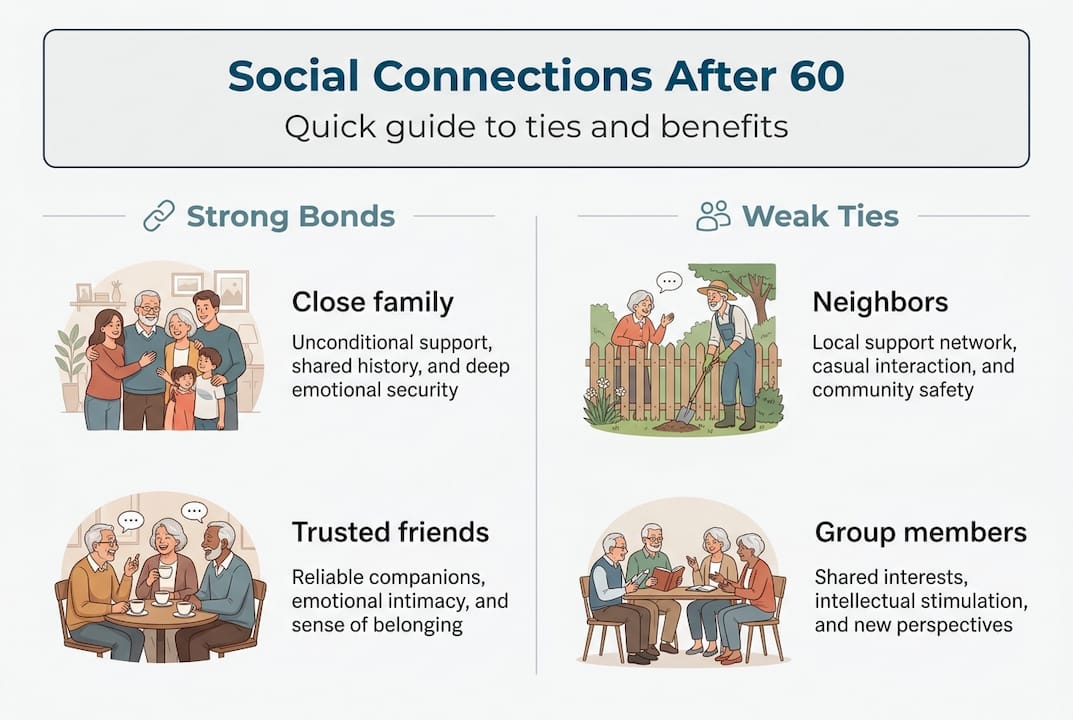
- Types of social connections: weak ties, strong bonds, and more
- Effective strategies to build meaningful connections
- Our perspective: what most advice on building connections misses after 60
- Build your support network confidently with Social Souls
- Frequently asked questions
Key Takeaways
| Point | Details |
|---|---|
| Health matters | Strong social ties after 60 lower your risk of illness and boost long-term wellbeing. |
| Take small steps | Meaningful connections start with small, regular interactions in groups or online. |
| Use diverse sources | Both casual and close friendships play a role—embrace local, group, and digital opportunities. |
| Consistency wins | Building new friendships usually requires repeated, ongoing contact, not just one-off meetings. |
Why social connections matter after 60
Let us be direct: social connection is not a nice-to-have in later life. It is as important to your health as diet or exercise. Loneliness and isolation increase risks of heart disease, stroke, dementia, depression, and premature death, placing it on a par with smoking or obesity. That is a striking fact that most people simply do not know.
An AARP 2025 study found that 40% of adults aged 45 and over in the United States are lonely. The picture in the United Kingdom is similarly sobering.
It helps to understand the distinction between two related but different problems. Social isolation is objective: it means having few social contacts or little interaction with others. Loneliness is subjective: it is the painful feeling that your connections are not enough or not meaningful. You can be surrounded by people and still feel lonely. You can live alone and feel genuinely content. This matters because the solution is not always “more people” but often “better connection.”
The advantages of friendship in later life go well beyond mood. Regular social interaction is linked to:
- Lower risk of cognitive decline and dementia
- Reduced rates of depression and anxiety
- Stronger immune function and faster recovery from illness
- A measurably longer life
“The quality of your relationships matters far more than the quantity. One or two truly supportive friendships can have a profound effect on your health and happiness.”
This means you do not need a packed social calendar. You need real, consistent, caring contact with others.
What causes loneliness and isolation in later life?
Understanding why social isolation grows after 60 is the first step to addressing it. There is rarely a single cause. More often, several life changes happen at once, creating a perfect storm of disconnection.
Common triggers include:
- Retirement, which removes daily contact with colleagues and the routine that came with work
- Bereavement, particularly the loss of a partner or long-standing friends
- Declining mobility or hearing loss, which can make socialising feel effortful or embarrassing
- Fear of becoming a burden, which leads many older adults to withdraw rather than reach out
According to research on why loneliness intensifies after 60, these transitions often combine with psychological barriers like fear of rejection or a reluctance to start over socially. Men are particularly at risk: many reach later life with very few close friendships outside of their partner or work.
The consequences are significant. Social isolation is linked to a 20% lower likelihood of healthy ageing. Knowing this, staying socially active after 60 is not self-indulgent. It is a genuine health priority.
“Isolation does not always look dramatic. Sometimes it is just a gradual thinning of contact, until one day you realise you have not had a proper conversation with anyone in days.”
Pro Tip: Do not wait until you feel lonely to act. Build small, regular interactions into your week now, a familiar face at a coffee shop, a weekly phone call, a community class. Routine contact is the foundation of deeper connection.
Types of social connections: weak ties, strong bonds, and more
Not all social connections are the same, and recognising this can open up far more possibilities than you might expect.
| Type of connection | What it means | Benefit for over 60s |
|---|---|---|
| Strong ties | Close friends, family, trusted confidants | Emotional support, psychological safety |
| Weak ties | Casual acquaintances, neighbours, shop staff | Cognitive stimulation, sense of belonging |
| Group connections | Clubs, classes, faith groups | Shared purpose, regular contact |
Experts describe a concept called social fitness, the idea that casual daily interactions reduce anxiety and build resilience, even when they do not lead to deep friendship. A chat with your postman or a familiar face at the library genuinely counts.

Research also distinguishes between two styles of social network. Bonding networks are close and dense, offering psychological safety and support. Bridging networks are diverse and looser, and these are particularly good for keeping the mind sharp and expanding your sense of the world.
Engaging with both is the ideal. Joining regular groups and local events gives you repeated contact with varied people, which is exactly what friendship research says you need. Studies suggest 50+ hours of interaction are typically needed to move from acquaintance to casual friend.
Pro Tip: Give yourself permission to enjoy lighter connections. Not every interaction needs to become a deep friendship. A pleasant weekly exchange with a neighbour adds genuine warmth to your life and builds the social confidence needed for closer bonds.
Effective strategies to build meaningful connections
Knowing what to do is one thing. Getting started is another. Here are practical, evidence-backed steps you can begin this week.
- Join a regular group or class. Consistency is the key ingredient in friendship. Weekly pottery, walking, or book groups create the repeated contact that allows friendships to grow naturally.
- Volunteer locally. Shared purpose is a powerful social glue. Volunteering also gives structure to your week and a genuine sense of contribution.
- Try a digital community. Social internet use is associated with lower levels of loneliness, particularly when you feel genuinely supported within the online network.
- Explore intergenerational programmes. Contact with younger people brings fresh perspectives and unexpected warmth.
- Consider group support or talking therapy if loneliness feels persistent or deeply rooted. This is a sign of self-awareness, not weakness.
For those who prefer to start online before venturing in person, community building online is a genuinely effective bridge. And if safety concerns have held you back from digital spaces, guidance on safe companionship online can help you take that first step with confidence.
| Strategy | Best for | Time to see results |
|---|---|---|
| Regular classes or groups | Building consistent new friendships | 2 to 3 months |
| Volunteering | Purposeful connection | 4 to 6 weeks |
| Online communities | Maintaining or expanding social ties | Immediate to ongoing |
Pro Tip: Consistency outperforms intensity every time. One regular activity each week will do more for your social health than attending five events and then stopping. Start small, stick with it.
Our perspective: what most advice on building connections misses after 60
Most guides tell you to join a club or call an old friend. That is not wrong, but it misses something important. There is an unhelpful obsession with finding a best friend that can make perfectly good, warm interactions feel like failures by comparison.
In our experience, the people who build the richest social lives after 60 are not hunting for a soulmate friendship. They are curious. They show up repeatedly. They stay open to connection in places they did not expect it. They combine in-person warmth with digital tools that help maintain the best ways to stay socially active over time. It is never too late. Openness matters more than opportunity.
Build your support network confidently with Social Souls
If you are ready to take the next step, you do not have to navigate it alone. Social Souls is built specifically for people over 60 who want genuine, safe, and enjoyable social connection.
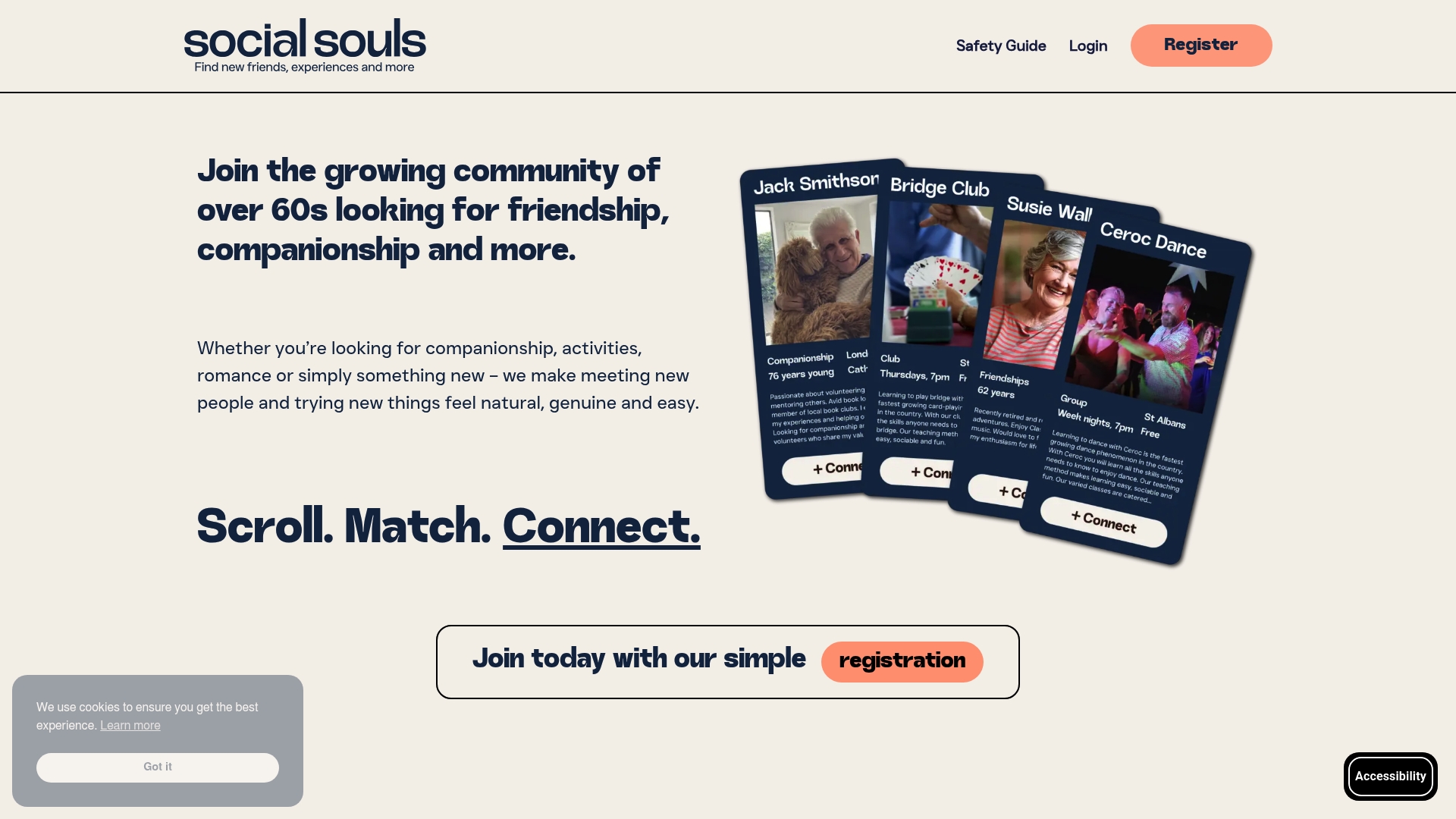
From expert guidance on community building for over 60s to a welcoming space for safe companionship online, everything is designed to feel approachable and supportive. Whether you are just beginning to reconnect or looking to widen your social circle, explore Social Souls and see what is waiting for you.
Frequently asked questions
What is the difference between social isolation and loneliness?
Social isolation refers to an objective lack of social ties, while loneliness is the subjective distress of feeling disconnected. You can experience one without the other, which is why quality of connection matters more than the number of contacts.
Do online friendships really help reduce loneliness for over 60s?
Yes. Internet-based social contact is associated with lower loneliness, particularly when the online network feels genuinely supportive. It works best alongside, rather than instead of, in-person interaction.
How long does it take to build a new friendship after 60?
Research suggests that at least 50 hours of shared interaction are typically needed to move from acquaintance to casual friend, which is why regular, repeated contact in a group or class is so effective.
Is it common to lose friends after retirement or bereavement?
Very common. Retirement and bereavement are among the most frequently reported triggers for social withdrawal in over-60s, often happening together in a short space of time and compounding the sense of isolation.