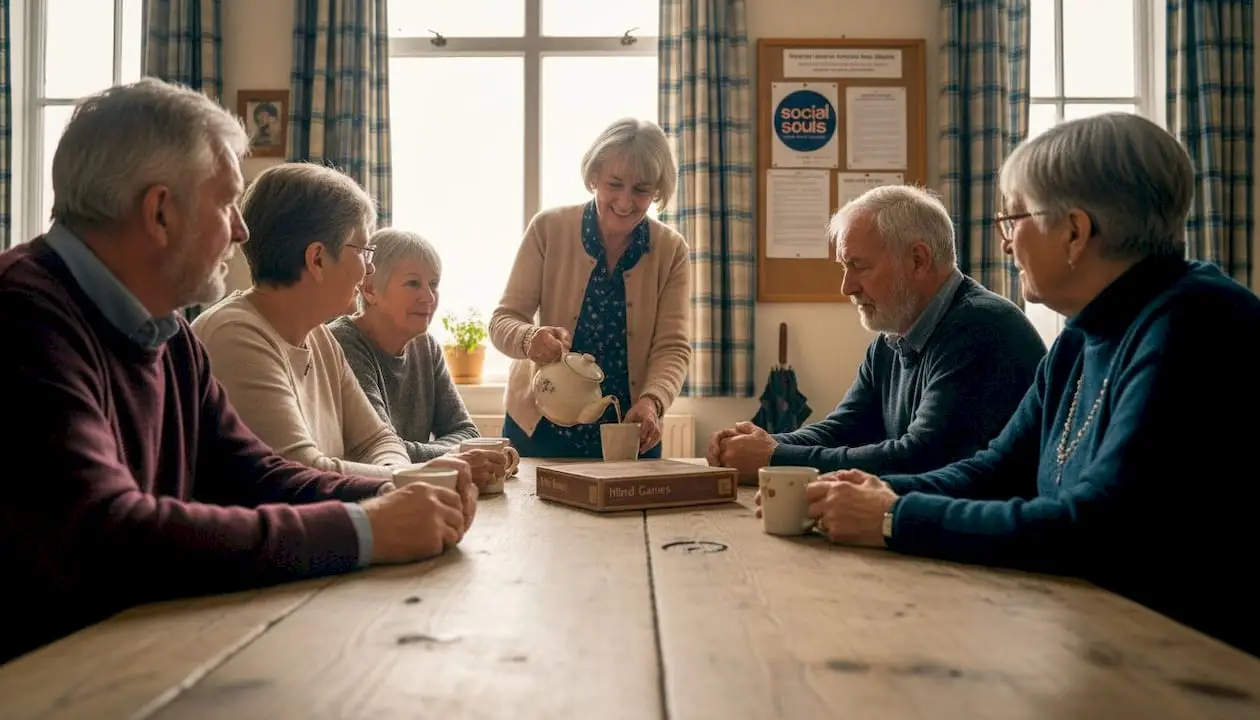
Loneliness after retirement is more common than most people admit. 40% of seniors experience it regularly, yet joining a senior social group can cut mortality risk from 12% to just 2% in the first six years of retirement. That is a remarkable difference, and it comes simply from being part of a community. Many people assume joining a group involves complicated paperwork, steep fees, or awkward interviews. In reality, the process is straightforward, often free, and far more welcoming than you might expect. This guide walks you through every stage, from choosing the right group to settling in confidently.
Table of Contents
- Why join a senior social group?
- What you need to join: Requirements and documents
- Step-by-step: The process for joining a senior social group
- Adjusting, participating, and overcoming first hurdles
- Special cases: Online access and inclusive options
- What most guides miss: Real barriers and lasting connections
- Find your community with Social Souls
- Frequently asked questions
Key Takeaways
| Point | Details |
|---|---|
| Joining is straightforward | You only need basic documents and a small fee (if any) to start connecting. |
| Consistent attendance builds bonds | Regular participation, not just joining, is the key to finding friends. |
| Many inclusive options exist | Virtual and accessibility-focused groups mean everyone can belong. |
| Try multiple groups | There’s no harm in sampling different clubs to find the best social fit. |
Why join a senior social group?
The case for joining a senior social group goes well beyond filling a quiet afternoon. Loneliness is not just an emotional experience. It affects your physical health in measurable ways. Research shows that group membership reduces mortality risk from 12% to 2% during the first six years of retirement. That is not a small margin. It is the kind of difference that adds years to your life.
Beyond the numbers, the day-to-day benefits are just as real. A regular group gives you somewhere to be, people who notice when you are absent, and activities that keep your mind active. Friendships formed in groups often become the most reliable support networks people have in later life.
Here are some of the most consistent benefits members report:
- Improved mental health through regular conversation and shared laughter
- Reduced isolation by creating a reliable weekly routine with others
- Physical activity through walking groups, dance classes, or gentle sports
- A sense of purpose, especially through volunteering roles within the group
- New skills and interests, from painting to technology to gardening
Volunteering deserves a special mention. Volunteering over 100 hours per year has been shown to significantly reduce loneliness. Many senior groups offer volunteering opportunities as part of their regular programme, which means you can contribute and connect at the same time.
The emotional dimension matters too. Knowing that others are expecting you, that your presence is valued, changes how you feel about your week. Groups create accountability in the kindest possible way.
What you need to join: Requirements and documents
Before you approach any group, it helps to know what to bring. Most senior social groups have simple, practical requirements. There is rarely anything daunting involved.
The most common requirements are:
- Proof of age: Most groups accept members aged 50 to 60 and above. A passport, driving licence, or birth certificate usually suffices.
- Proof of residency: Local community groups often ask for a recent utility bill or council tax letter to confirm you live in the area.
- Basic contact details: Name, phone number, and an email address if you have one.
- A small membership fee: Fees typically range from free to around £110 per year, depending on the group and its facilities.
Here is a quick overview of what different group types typically require:
| Group type | Age requirement | Typical annual fee | Residency proof needed? |
|---|---|---|---|
| Local community centre | 60+ | Free to £40 | Often yes |
| National charity group | 50+ | £10 to £50 | No |
| Private social club | 55+ | £40 to £110 | Sometimes |
| Online social platform | 60+ | Free to £30 | No |
| Volunteering group | 50+ | Usually free | Occasionally |
Annual fees vary widely, with some groups entirely free and others charging up to £110. Many offer reduced rates for those on low incomes or pension credit, so it is always worth asking. You will not be the first person to enquire.
For reassurance about what to expect when sharing your details, you can review the safety and trust details that reputable platforms publish for new members.
Pro Tip: Ring the group ahead of your first visit and ask exactly what to bring. Most organisers are delighted to help and will put your mind at ease before you even walk through the door.
Step-by-step: The process for joining a senior social group
With your documents ready, the actual joining process is more manageable than most people anticipate. Here is how it typically works:
- Search for local and national options. Start with your local library, community centre, or council website. Online platforms such as Meetup, Age UK, and joining through Social Souls are also excellent starting points, particularly if you want to browse groups from home first.
- Attend a taster visit. Most groups welcome visitors before they commit. Go along, meet a few members, and get a feel for the atmosphere. There is no obligation at this stage.
- Complete a registration form. This is usually a single page, either on paper or online. It covers your name, contact details, and any health or accessibility needs.
- Provide your documents and pay any fee. Hand over your proof of age and residency if required. Pay the membership fee, if applicable, by cheque, cash, or card.
- Receive confirmation and attend your first official event. You will typically get a welcome letter or email. Then simply turn up and enjoy.
For those who prefer to handle things digitally, online registration support is available through platforms designed with older adults in mind.
| Method | Best for | Typical time to join |
|---|---|---|
| In-person at venue | Those who prefer face-to-face | Same day |
| Online registration | Tech-comfortable seniors | Under 30 minutes |
| Phone enquiry first | Those with questions or concerns | 1 to 3 days |
Pro Tip: Choose a group built around something you already enjoy, whether that is gardening, reading, or walking. Shared interests make conversation effortless from the very first meeting.
Adjusting, participating, and overcoming first hurdles
Joining is just the beginning. Settling in takes a little time, and that is entirely normal. Most people feel slightly out of place at first. The key is not to let one quiet afternoon put you off.
Here are some practical ways to ease yourself in:
- Attend regularly, even when you do not feel like it. Familiarity builds faster than most people expect.
- Volunteer for small tasks such as setting up chairs or making tea. It gives you a role and a reason to talk to people.
- Bring a friend to your first visit if that feels more comfortable. Having a familiar face beside you lowers the pressure considerably.
- Ask the group leader about a buddy system. Many established groups pair new members with a longer-standing member for the first few weeks.
- Try icebreaker activities when offered. They exist precisely to make introductions less awkward.
Consistency builds bonds despite the occasional clique or quiet session. Most strong friendships in group settings take several visits to form, not just one.
It is worth knowing that cliques can exist in any group. This is not unique to senior circles.
“Group leaders can make a real difference by using table icebreakers and encouraging smaller subgroups, which helps new members integrate far more naturally than simply hoping existing friendships will open up on their own.” Friendship Recession
If you find a particular group feels unwelcoming after several visits, it may simply not be the right fit. Try another. For more guidance on settling in, the group integration tips on Social Souls cover this well.
Pro Tip: Consistency is the real secret. Showing up week after week, even briefly, does more for friendship-building than any single grand gesture.
Special cases: Online access and inclusive options
Not every senior can attend in-person groups. Mobility challenges, transport difficulties, or simply living in a rural area can make traditional group attendance difficult. Fortunately, there are good alternatives.
Virtual and transport options are increasingly available, including shuttle services for older adults and fully online group meetings. Here is what to look for:
- Online groups and virtual clubs: Platforms like Social Souls host groups that meet digitally, making them accessible from your living room. Joining groups online takes just a few minutes.
- Transport assistance: Some community centres offer minibus or shuttle services for members who cannot drive.
- Reduced or free fees: Many groups offer concessions for those on low incomes, pension credit, or disability benefits. Always ask.
- Mobility-friendly venues: Look for groups that meet in step-free, accessible buildings with adequate seating and facilities.
- LGBTQ+ inclusive groups: Many senior centres now host dedicated LGBTQ+ social groups, offering a safe and welcoming space.
- Cultural and language-based groups: Groups catering to specific communities, whether by language, faith, or cultural background, are increasingly common in larger towns and cities.
If you have specific accessibility needs, it is worth checking the accessibility features of any platform you use before signing up. A good platform will accommodate adjustable text, colour settings, and screen reader compatibility.
What most guides miss: Real barriers and lasting connections
Most step-by-step guides make joining a group sound effortless. The truth is slightly more honest than that. Many people try a group once, feel awkward, and never return. That one uncomfortable afternoon becomes the reason they stay home for the next two years.
What those guides rarely say is that most meaningful friendships in group settings form after the fifth or sixth visit, not the first. The people who seem to belong so naturally have simply been showing up longer. They were once the new face in the room too.
Cliques are real. Some groups have a tight inner circle that is slow to open. But building trust in groups takes time on both sides, and persistence genuinely pays off. The members who break through are almost always the ones who keep coming back and who make the first friendly move rather than waiting for others to do it.
Our honest advice: try at least three different groups before deciding that group socialising is not for you. Not every group will suit your personality or interests, and that is fine. The right one will feel noticeably different from the moment you walk in.
Friendship at any age requires a little courage and a willingness to feel slightly uncomfortable before things get easier. That discomfort is temporary. The connections that follow can last for years.
Find your community with Social Souls
If reading this has made you think about taking that first step, Social Souls makes it easier than most. The platform is built specifically for people over 60 who want genuine connection, not endless scrolling. Every profile is verified, the interface is simple to navigate, and accessibility features mean the experience works for everyone.
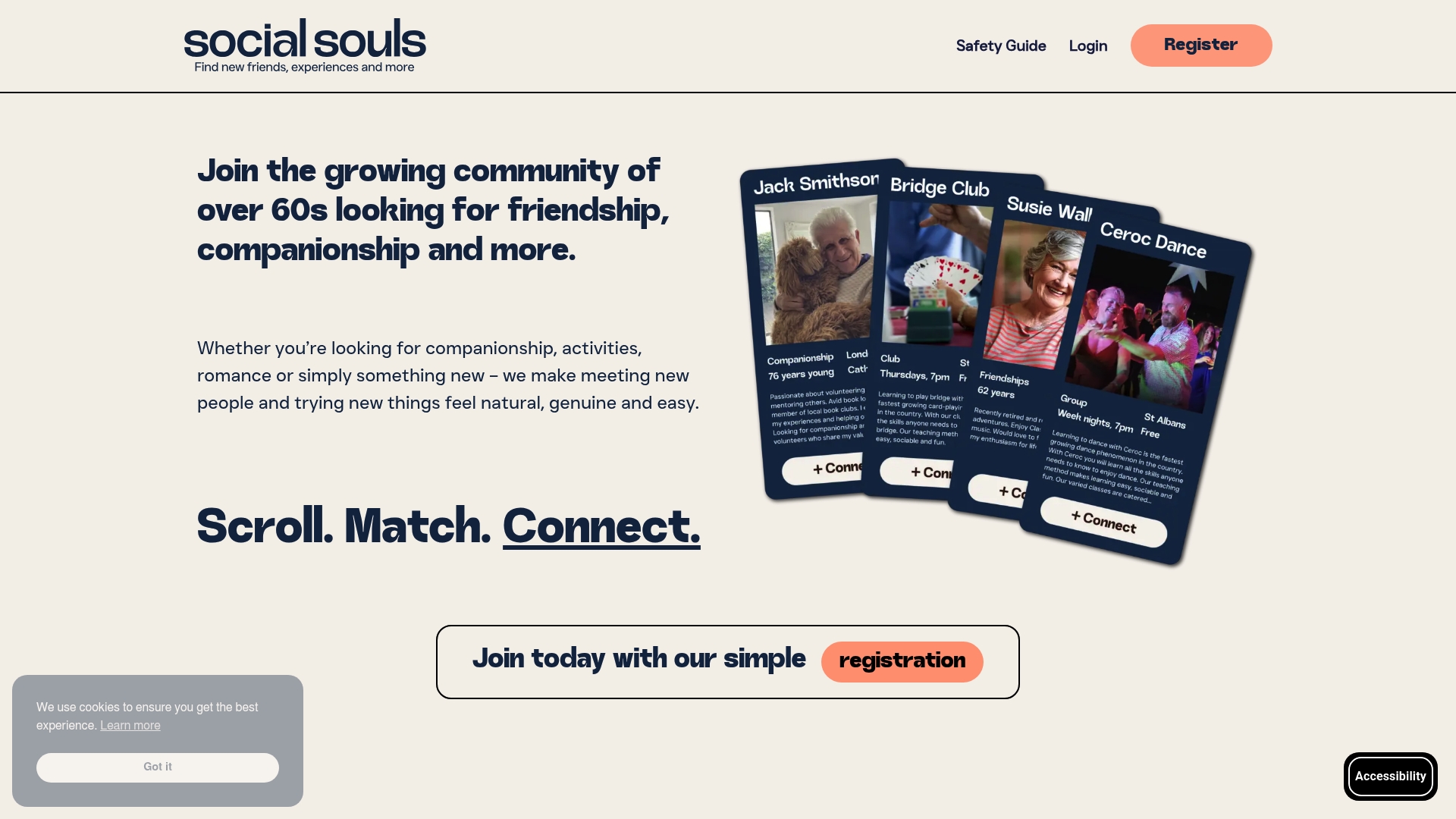
Whether you want to join Social Souls groups from home or find a local club to visit in person, the process takes just a few minutes. The group safety promise means you can connect with confidence, knowing that every member and organisation has been checked. Your next friendship could be closer than you think.
Frequently asked questions
Do I need to pay to join a senior social group?
Many groups are free or charge a small annual fee, often with discounts for those on low incomes. Fees range widely, from entirely free to around £110 per year depending on the group type.
Can homebound or disabled seniors join groups online?
Yes, many senior groups offer virtual meetings or online events for those unable to attend in person. Virtual and transport options are increasingly available to support those with mobility or access challenges.
What proof do I need to join?
Most groups require proof of age (usually 50 to 60 and above) and sometimes a recent document confirming your address, such as a utility bill or council letter.
Are there groups for LGBTQ+ or specific cultures?
Yes, many groups cater specifically to LGBTQ+ seniors and various cultural communities. LGBTQ+ and cultural groups are increasingly common at senior centres and through online platforms, offering a more inclusive and comfortable environment.