TL;DR:
- Safe social platforms for over-60s include verified profiles, moderation, and privacy controls.
- Community connection reduces loneliness, supports mental health, and fosters genuine relationships.
- Accessible features and a respectful culture are key to creating welcoming online environments.
Many older adults are told that the internet is a dangerous place, full of scammers and strangers with bad intentions. That belief stops thousands of people from finding the genuine friendships and companionship they deserve. The truth is rather different. Safe, well-designed social platforms built specifically for over-60s are changing what online connection looks like, offering verified communities, clear safety tools, and accessible features that make it easier than ever to meet like-minded people. This guide walks you through what makes a social site truly safe, how to protect yourself online, and why the right platform can genuinely improve your well-being.
Table of Contents
- What makes a social site safe for over-60s?
- Community, belonging, and well-being: True value of safe social sites
- Avoiding scams and risks: Practical steps for safer connections
- Accessibility and inclusion: Features that empower everyone
- Our perspective: What most guides miss about online safety for older adults
- Discover safer, more welcoming social spaces for over-60s
- Frequently asked questions
Key Takeaways
| Point | Details |
|---|---|
| Safety features matter | Platforms with privacy controls, scam awareness, and moderation significantly reduce risk for older adults. |
| Community boosts well-being | Safe social sites help older adults stay connected, offering true companionship and support. |
| Practical steps prevent scams | Using multi-factor authentication and staying informed about risks helps protect against common online threats. |
| Accessibility empowers inclusion | Accessible design ensures everyone, regardless of ability, can enjoy meaningful online social experiences. |
What makes a social site safe for over-60s?
Not every social platform is built with older adults in mind. Many mainstream sites prioritise speed and scale over safety, leaving users to navigate a noisy, unmoderated environment. A truly safe social site is one that actively protects its members through verified profiles, clear community standards, and ongoing support.
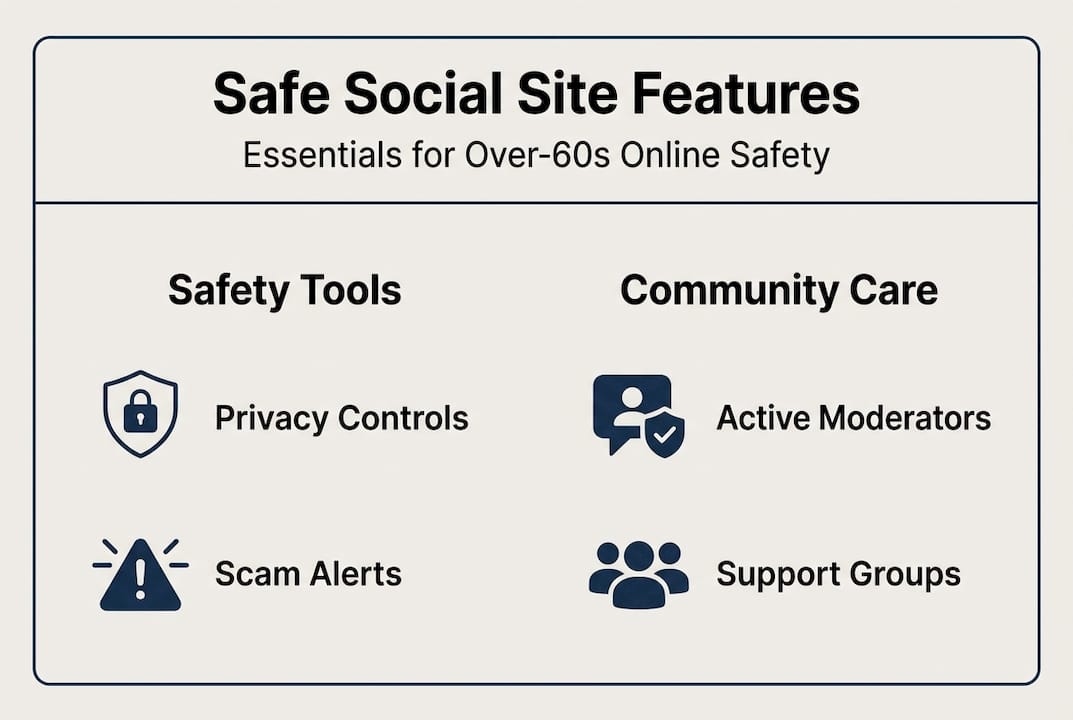
Safety on a social platform is not just about having a padlock icon in the browser. It means the platform has systems in place to check who its members are, monitor for suspicious behaviour, and give you the tools to control your own privacy. Safe social sites support safer connection by offering practical guidance on avoiding phishing, protecting personal information, and using platform privacy controls, which is especially important when older adults may be targeted through social channels.
Here is a quick overview of the key safety features to look for:
| Safety feature | Why it matters |
|---|---|
| Profile verification | Reduces fake accounts and catfishing |
| Active moderation | Keeps conversations respectful and on-topic |
| Privacy controls | Lets you decide who sees your information |
| Scam prevention tools | Flags suspicious messages and links |
| Reporting system | Gives you a clear way to flag concerns |
Beyond the table above, there are a few specific things worth checking before you join any platform:
- Does the site explain its moderation process clearly?
- Are there community guidelines that members must agree to?
- Can you control who contacts you and who sees your profile?
- Is there a dedicated support team you can reach if something goes wrong?
You can review the community trust standards that a responsible platform should uphold, and compare them against any site you are considering. It is also worth reading a safe dating guide before you start connecting with new people, even in a friendship context.
Pro Tip: Look for platforms that offer practical scam awareness training alongside their privacy settings. A site that educates its members is one that genuinely cares about their safety, not just their sign-up numbers.
According to research, roughly 1 in 3 older adults encounter some form of online fraud or suspicious contact each year, making these features far more than a nice-to-have.
Community, belonging, and well-being: True value of safe social sites
Safety features matter, but they are only part of the story. The deeper reason to seek out a well-run social platform is what it gives you in return: a genuine sense of belonging.
Loneliness among older adults is a serious concern. Research consistently links social isolation to poorer physical and mental health outcomes, including increased risk of depression and cognitive decline. A safe online community does not replace face-to-face contact, but it can meaningfully bridge the gap, particularly for those who have lost a partner, moved to a new area, or simply find it harder to get out and about.
“Safe social sites can provide community and belonging while reducing risk, because the core benefits are connection, peer support, and access to interest groups, but only if safety mechanisms and support are present.” What older adults need to know about connecting and staying safe online
The types of connection you can find on a well-moderated platform include:
- Friendship: Meeting people who share your interests, from gardening to travel to books
- Peer support groups: Connecting with others who understand your life stage and experiences
- Romantic companionship: Finding someone to share your time with, at whatever pace feels right
- Interest-based communities: Joining clubs, events, or local groups through a single platform
What sets safe platforms apart is the quality of interaction they encourage. When spam is filtered out and every member has been verified, conversations feel more genuine. You are less likely to encounter someone trying to manipulate or mislead you, and more likely to find someone who simply wants to chat. Connecting with community in this way builds confidence over time, especially for those who are new to online socialising.
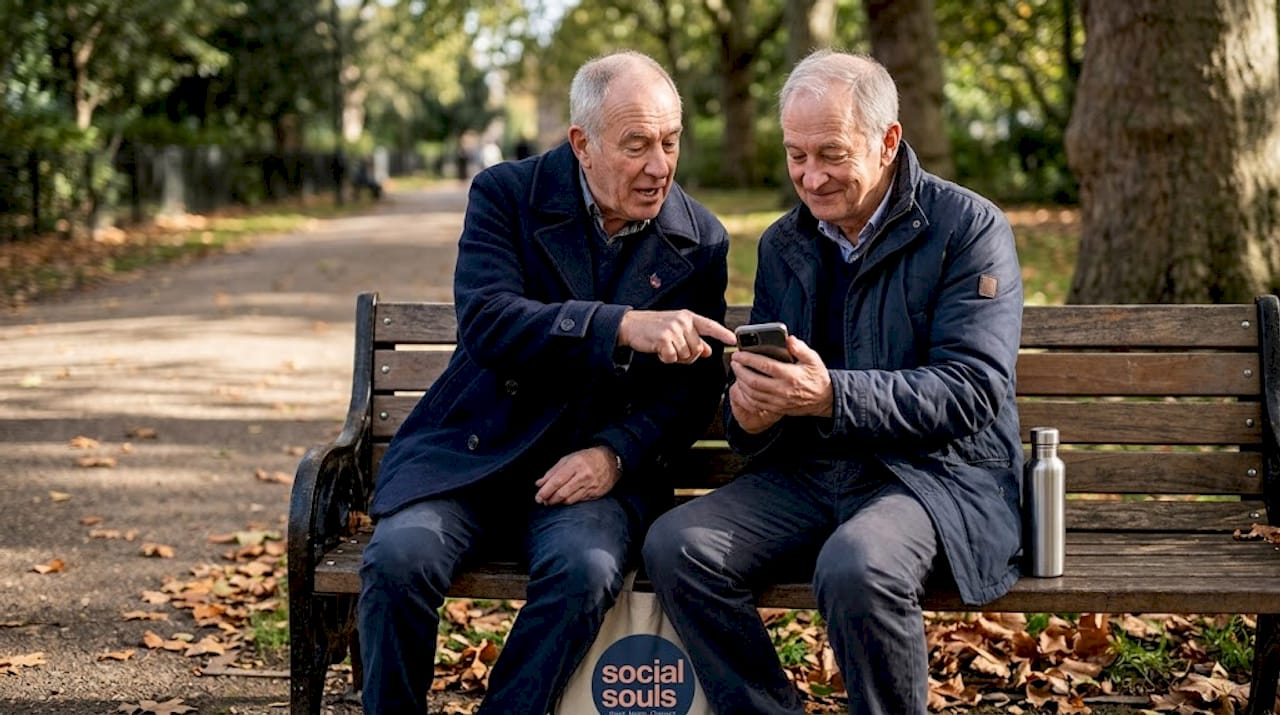
The mutual support that grows within these communities is also worth noting. Members often share advice, recommend local services, and check in on one another. That kind of informal care network is something many older adults have lost as families spread out and social circles shrink.
Avoiding scams and risks: Practical steps for safer connections
Even on the safest platforms, it pays to stay alert. Understanding the most common risks helps you spot them early and respond with confidence rather than panic.
The main threats older adults face on social sites include phishing messages (links designed to steal your login details), fake friendship requests from accounts that do not exist, and fraudulent messages asking for money or personal information. These tactics are often sophisticated and can feel very convincing.
Here is how moderated platforms compare to unmoderated ones when it comes to your protection:
| Feature | Moderated platform | Unmoderated site |
|---|---|---|
| Fake account detection | Active and ongoing | Minimal or absent |
| Suspicious message flagging | Automated and manual | None |
| Reporting tools | Clear and accessible | Difficult to find |
| Member support | Dedicated team available | Self-service only |
| Scam education | Built into onboarding | Rarely provided |
If you want to stay safe, follow these practical steps:
- Verify before you trust. Check that a profile has a verified badge before sharing personal details.
- Never send money. No genuine new friend will ask you for financial help within weeks of meeting online.
- Double-check suspicious messages. If something feels off, do not click any links. Report the message instead.
- Keep your devices updated. Outdated software is easier for scammers to exploit.
- Review your privacy settings regularly. What was set up last year may not reflect what you want today.
You can find detailed social site scam awareness advice to help you recognise warning signs before they become problems. If you ever need to take action on your account, guidance on account management and scams is also available.
Pro Tip: Enable multi-factor authentication on any social account you create. It takes less than two minutes to set up and makes it significantly harder for anyone to access your account without your knowledge.
The Elder Care Alliance recommends double-checking suspicious communications, keeping devices and apps updated, and using multi-factor authentication as core habits for staying safe on social platforms.
Accessibility and inclusion: Features that empower everyone
A social site can have excellent safety features and still fail older adults if it is difficult to use. Accessibility is not an optional extra. It is a fundamental part of what makes a platform genuinely welcoming.
As we age, many of us experience changes to our vision, hearing, or dexterity. These changes should not be a barrier to staying connected. Accessibility features can make a real difference for seniors with vision, hearing, or dexterity needs, allowing them to participate fully and independently.
Research suggests that around 46% of adults aged 60 and over live with at least one disability or accessibility need, yet many social platforms are still designed primarily for younger, able-bodied users. That gap matters enormously when you are trying to build new friendships online.
Here are the accessibility tools worth looking for on any platform you consider:
- Adjustable text size: So you can read comfortably without straining
- High-contrast colour options: Helpful for those with low vision or colour sensitivity
- Simple, uncluttered navigation: Fewer clicks to get where you need to go
- Audio and video chat: Useful for those who find typing difficult or prefer face-to-face conversation
- Screen reader compatibility: Ensures the site works with assistive technology
- Clear, plain-language instructions: No jargon, no confusing technical steps
When a platform invests in accessibility, it sends a clear message: everyone is welcome here. That sense of dignity and inclusion is what encourages people to stay, engage, and build lasting connections. You can read more about what good design looks like in a dedicated accessibility statement.
Inclusion also means designing for varying levels of digital confidence. A site that assumes its members are tech-savvy will lose the people who need it most. The best platforms offer gentle onboarding, clear help resources, and patient support teams.
Our perspective: What most guides miss about online safety for older adults
Most safety guides focus entirely on technology: firewalls, passwords, two-factor authentication. Those things matter. But in our experience, the biggest factor in whether an older adult feels safe and welcome online is the culture of the community itself.
A platform can have every technical safeguard in place and still feel cold, unwelcoming, or confusing if the members do not treat each other with respect. Equally, a community where moderators are visible, approachable, and genuinely responsive creates a sense of trust that no software feature can replicate.
Ongoing education plays a huge role too. Scam tactics change constantly. A platform that sends regular updates, hosts community discussions about new risks, and empowers members to look out for one another is far more protective than one that simply installs a filter and moves on.
Pro Tip: Before committing to any platform, spend a little time reading public posts or community boards. How do members speak to each other? How quickly does staff respond to concerns? The answers will tell you more than any feature list.
The trusted community culture that a platform builds over time is what separates a genuinely safe space from one that merely looks safe on paper.
Discover safer, more welcoming social spaces for over-60s
You now know what to look for, what to avoid, and why the right platform can make a real difference to your social life and well-being. The next step is finding a community that puts all of this into practice.
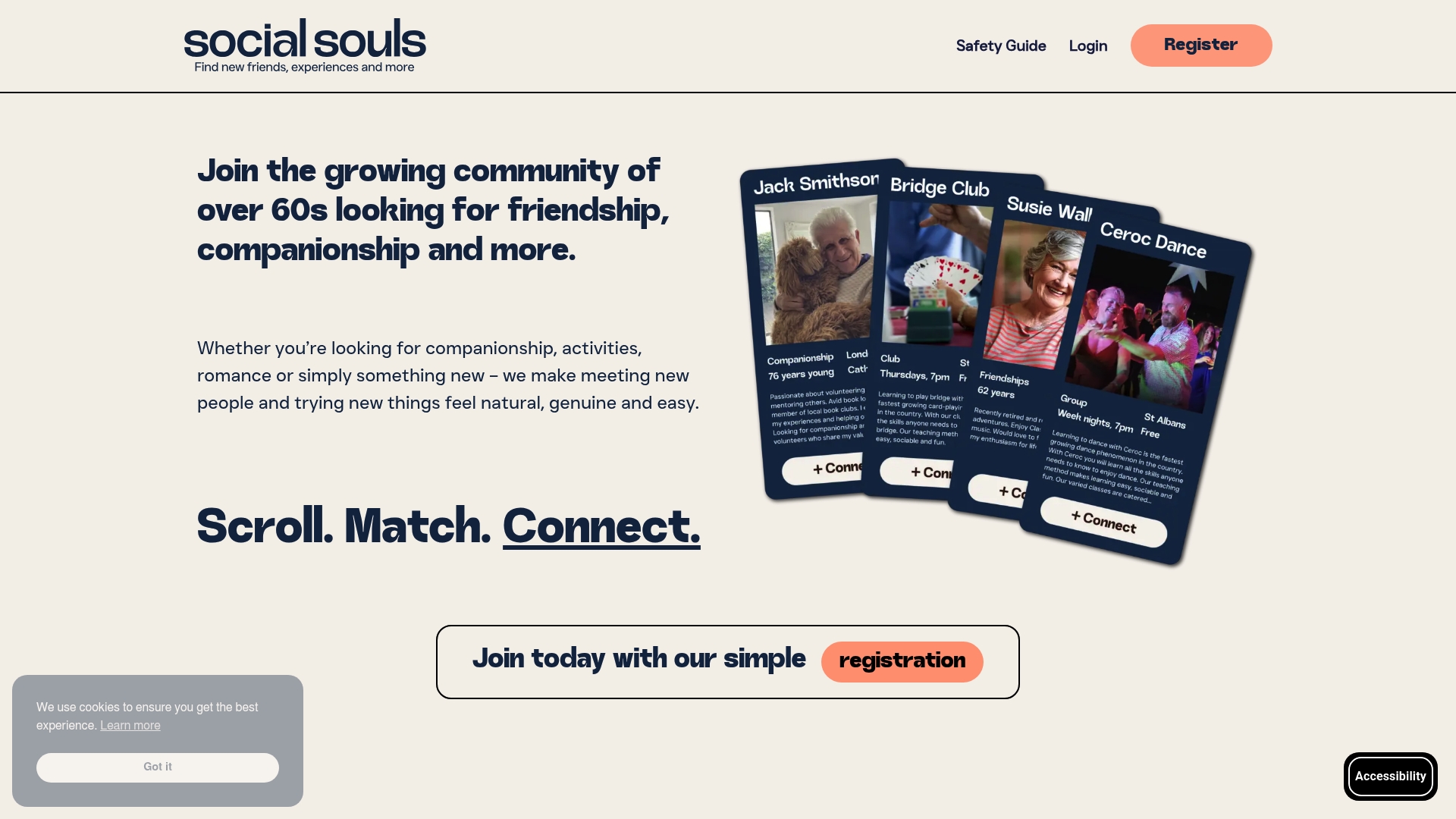
Social Souls is built specifically for over-60s who want to connect with genuine, verified members in a safe and accessible environment. From our Safe dating guide to our commitment to Social Souls safety & trust, every part of the platform is designed with your comfort and confidence in mind. Early members can join with a free lifetime membership. Join Social Souls today and take the first step towards meaningful connection on your own terms.
Frequently asked questions
What safety features should I look for in a social site?
Prioritise platforms with privacy controls, scam monitoring, user verification, and clear reporting options. Practical guidance on avoiding phishing and protecting personal information should also be built into the platform experience.
How can I tell if an online community is genuinely safe?
Look for platforms with active moderation, clear safety policies, and a supportive member culture. Safety mechanisms and support must both be present for a community to deliver genuine connection without undue risk.
What are the most common online scams targeting over-60s?
Phishing, fake friendship requests, and fraudulent links are the main risks for older adults online. Following internet safety tips such as double-checking suspicious communications and using multi-factor authentication significantly reduces your exposure.
Are there social sites made specifically for older adults?
Yes, some platforms are designed for over-60s and include features to ensure both safety and accessibility. These sites focus on community and belonging alongside peer support and interest-based groups tailored to this age group.